Hip Arthritis Treatment by Dr Christian Eccles, Hip & Knee Replacement Surgeon in Gilbert, Queen Creek, Chandler and Mesa, AZ
Hip arthritis wears away the cartilage of the ball and socket, often causing groin pain, stiffness, and trouble walking. Dr. Eccles starts with activity changes, physical therapy, anti-inflammatory medication, and injections when they are appropriate, and discusses hip replacement if pain still limits daily life.
What is Hip Arthritis?
Joint surfaces are covered by a smooth covering called cartilage. This allows pain-free, smooth movement between the bones.
Hip osteoarthritis, also called degenerative joint disease, is the most common form of arthritis. Arthritis is a general term covering numerous conditions where the joint surface or cartilage wears out or becomes damaged. This can be caused by genetics, increased age, overuse, trauma, hip diseases such as avascular necrosis and developmental issues, and/or obesity. In hip arthritis, the cartilage of the femoral head as well as pelvic socket becomes damaged and worn out, causing pain, swelling, stiffness and restricted movement.
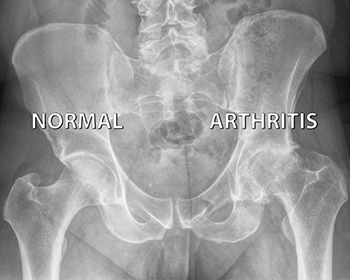
Symptoms of Arthritis
When the articular cartilage wears out, the bone ends rub on one another which causes pain which most of the time presents as groin pain. Bone spurs or excessive bone can also build up around the edges of the joint. This leads to stiffness and decreased mobility of the joint. The combinations of these factors can limit activities due to pain or fatigue.
Diagnosis
Arthritis is diagnosed with a medical history, a physical examination, and x-rays of the affected hip joint. An x-ray of the joint will typically show a loss of the joint space and bone spur formation. During the physical examination, Dr. Eccles will examine the affected joint’s range of motion and see if specific maneuvers provoke your symptoms.
Treatment
There are several lifestyle modifications and treatments options that may help you ease your pain and symptoms.
- Conservative
- Lifestyle modifications:
- There is strong evidence showing that a self-directed exercise or supervised physical therapy program keeps the joints flexible and strong.
- This also has the benefit of potentially decreasing body weight going through the joint which helps immensely with pain control.
- Every single pound of weight loss can remove 4 to 6 pounds of pressure of the knees and hips!
- Lifestyle modifications:
- Medications:
- There is strong evidence showing good arthritic pain and inflammation control with non-steroidal anti-inflammatory drugs (NSAIDs). These are medications such as:
- ibuprofen (Advil® and Motrin®)
- meloxicam (Mobic®)
- celecoxib (Celebrex®)
- diclofenac (Voltaren®)
- naproxen (Aleve®)
- Topical NSAID creams can typically be used in patients that are unable to take the pill forms.
- Tylenol (acetaminophen), which is not an NSAID, has been shown to reduce pain and improve function and typically is safe to take 1000mg three times a day along with an anti-inflammatory medication above.
Other options include steroid injections into the joint to decrease inflammation and using walking aids such as a cane.
- There is strong evidence showing good arthritic pain and inflammation control with non-steroidal anti-inflammatory drugs (NSAIDs). These are medications such as:
- Surgical: Surgery can be considered if non-surgical treatment fails to provide sufficient relief. So, when is the right time to do this? Joint replacement can be a good option when the pain is so severe that it affects your ability to carry out normal activities and you are medically optimized/safe to have surgery.
- What doesn’t work: The American Academy of Orthopaedic Surgeons (AAOS) have produced guidelines based on scientific studies and have shown that hyaluronic acid (gel) or any other forms of injections (ex. stem cells), glucosamine/chondroitin supplementation, acupuncture, and narcotic medications are not effective or recommended for arthritis treatment.
Why Choose Dr. Christian Eccles for Hip Arthritis
When hip arthritis starts limiting how you walk, work, or sleep, you deserve a clear plan built around your goals. Here is how our team approaches hip arthritis care:
- A practice focused on hips and knees: Dr. Eccles is a fellowship-trained, board-certified surgeon who specializes in hip and knee replacement, so hip arthritis care is at the center of what we do every day.
- Non-surgical care first: We start with evidence-based options such as exercise or physical therapy, weight management, anti-inflammatory medication, walking aids, and steroid injections when appropriate.
- Honest, guideline-based advice: We follow American Academy of Orthopaedic Surgeons (AAOS) guidance, so we won't steer you toward treatments shown not to help arthritis, such as gel or stem cell injections, glucosamine, or narcotic pain medication.
- Modern hip replacement when you need it: If pain still limits your daily life, Dr. Eccles offers anterior and posterior hip replacement, OrthoGrid Hip AI navigation, and same-day surgery for appropriately selected patients.
- Two convenient Gilbert offices: We see patients at our North Gilbert and South Gilbert offices, close to home for families in Gilbert, Queen Creek, Chandler, and Mesa.
Hip Arthritis FAQs
How do I know if my hip pain is caused by arthritis?
Hip arthritis most often causes pain in the groin or front of the hip, along with stiffness and difficulty walking. Dr. Eccles confirms the diagnosis with your history, a physical exam, and X-rays that can show narrowing of the joint space and bone spurs.
Can hip arthritis be reversed?
Worn cartilage does not grow back, but many people control their symptoms for a long time with exercise, weight management, medication, and injections. Our goal is to keep you active and comfortable with the least invasive treatment that works for you.
Will losing weight help my hip arthritis?
For many people, yes. Every pound you lose can take about 4 to 6 pounds of pressure off your hips and knees, which may ease pain and make exercise easier.
When should I consider hip replacement?
Hip replacement may be worth discussing when arthritis pain limits your everyday activities despite non-surgical treatment and you are medically ready for surgery. The decision is always yours, and we will walk you through the benefits, risks, and recovery so you can decide with confidence.
Schedule Your Visit
Hip arthritis doesn't have to keep you on the sidelines. Call us at (602) 648-5444 or request an appointment at our North Gilbert office (2940 E Banner Gateway Dr., Suite 200) or South Gilbert office (1675 E Melrose St., Suite 101) to talk with Dr. Eccles about your options.