Narcotic-Free Knee Replacement in Gilbert, Queen Creek, Chandler and Mesa, AZ
If knee arthritis is making walking, exercising, sleeping, or everyday activities difficult, narcotic-free knee replacement may be an option for managing pain while minimizing or avoiding opioid medications. Dr. Christian Eccles is a fellowship-trained, board-certified hip and knee replacement surgeon serving patients in Gilbert, Queen Creek, Chandler, and Mesa, AZ. His practice focuses on advanced joint replacement, outpatient surgery, robotic technology, and recovery strategies designed to support mobility and comfort.
What Is Narcotic-Free Knee Replacement?
Narcotic-free knee replacement is a pain-management approach to knee replacement that aims to minimize or eliminate the need for opioid or narcotic medications during recovery. It does not mean that surgery is performed without anesthesia or that patients are expected to experience significant pain.
Instead, pain control can involve a multimodal approach, combining different techniques and medications that work through different mechanisms. Depending on the patient's needs, this may include regional anesthesia, local anesthetic techniques, non-opioid medications, ice, elevation, physical therapy, and other recovery strategies.
Dr. Eccles' practice specifically emphasizes minimizing postoperative pain and narcotic use as part of its approach to outpatient and fast-recovery total joint replacement.
What Are the Benefits of Narcotic-Free Knee Replacement?
When medically appropriate, reducing or avoiding opioid medications after knee replacement may provide several potential advantages:
- Reduced exposure to opioid medications
- Lower risk of opioid-related side effects
- Less nausea, constipation, dizziness, or drowsiness associated with opioids
- Ability to remain more alert during rehabilitation
- Reduced concern about dependence or prolonged opioid use
- Potentially easier participation in physical therapy
- Greater emphasis on multimodal pain management
- Convenient recovery at home for appropriately selected outpatient patients
Pain experiences vary significantly between individuals. A narcotic-free or opioid-sparing plan should therefore be personalized rather than treated as a universal requirement.
When Is Narcotic-Free Knee Replacement Recommended?
A narcotic-free or opioid-minimizing pain-management plan may be considered for patients undergoing knee replacement who want to reduce their reliance on narcotic medications and are appropriate candidates for alternative pain-control strategies.
It may be particularly relevant for patients who:
- Prefer to minimize opioid medications
- Have concerns about opioid-related side effects
- Are candidates for outpatient knee replacement
- Want to remain alert during early rehabilitation
- Can participate in a structured postoperative recovery program
- Are medically appropriate for multimodal pain management
Your surgeon and anesthesia team will determine which pain-control methods are appropriate based on your medical history, medications, allergies, surgical procedure, and individual needs.
What Does Preparation for Narcotic-Free Knee Replacement Involve?
Preparation begins with a comprehensive evaluation. Your surgeon will review your knee symptoms, medical history, medications, allergies, previous surgeries, and imaging studies. This information helps determine whether knee replacement is appropriate and allows the care team to develop an individualized pain-management strategy.
Before surgery, patients may receive instructions regarding medications, eating and drinking, exercises, transportation, home preparation, and postoperative assistance. Strengthening and conditioning exercises before surgery may also help prepare the body for rehabilitation.
Patients should discuss all medications and supplements with their surgical team and should not stop prescribed medications unless specifically instructed to do so.
How Is Narcotic-Free Knee Replacement Performed?
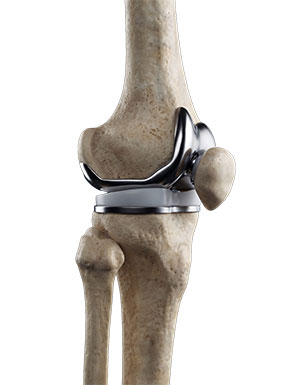
The knee replacement itself is performed using the surgical technique appropriate for the patient's condition. During total knee replacement, damaged portions of the knee are removed and replaced with artificial components.
Narcotic-free pain management focuses primarily on how pain is controlled before, during, and after surgery, rather than changing the fundamental purpose of knee replacement.
A multimodal plan may incorporate regional anesthesia, local anesthetic techniques, non-opioid medications, ice, elevation, and early physical therapy. Dr. Eccles also offers advanced technology-assisted knee replacement, including robotic and AI/navigation solutions, for appropriately selected patients.
The exact combination of pain-management techniques is individualized to each patient.
What to Expect During Recovery After Narcotic-Free Knee Replacement?
Recovery begins shortly after surgery. Patients are generally encouraged to begin appropriate movement and physical therapy early to restore knee mobility, strength, balance, and walking ability.
Some soreness, swelling, and stiffness are expected following knee replacement. A multimodal pain-management program aims to control these symptoms while minimizing reliance on narcotic medication.
Dr. Eccles offers outpatient total knee replacement for appropriately selected patients. Patients may be able to return home the same day when they meet established discharge criteria, including adequate pain control, stable medical status, and the ability to safely perform required mobility activities.
Your recovery plan may include prescribed non-opioid medications, exercises, physical therapy, ice, elevation, and gradual increases in activity.
What Are the Risks and Complications of Narcotic-Free Knee Replacement?
Knee replacement carries potential surgical risks regardless of the pain-management strategy. These may include:
- Infection
- Blood clots
- Bleeding
- Persistent pain or swelling
- Knee stiffness
- Nerve or blood-vessel injury
- Implant loosening or wear
- Limited range of motion
- Need for additional surgery
- Inadequately controlled pain
Avoiding narcotics is not appropriate for every patient. If pain cannot be adequately controlled with non-opioid strategies, your care team may recommend additional medications to maintain a safe and comfortable recovery.
Why Choose Dr. Christian Eccles for Narcotic-Free Knee Replacement in Gilbert, AZ?
Dr. Christian Eccles is a fellowship-trained, board-certified orthopedic surgeon specializing in hip and knee replacement. He completed an Adult Reconstruction Fellowship at Indiana University following orthopedic surgery residency at the University of Louisville.
His practice emphasizes outpatient and fast-recovery total joint replacement, with an interest in minimizing postoperative pain and narcotic use. He also incorporates robotic technology and AI/navigation into selected knee replacement procedures.
For patients in Gilbert, Queen Creek, Chandler, and Mesa, AZ, Dr. Eccles provides specialized evaluation and treatment focused specifically on hip and knee reconstruction.
Narcotic-Free Knee Replacement FAQs
Does narcotic-free knee replacement mean I will have no pain?
No. The goal is to manage pain effectively while minimizing or avoiding opioid medications. Some discomfort after surgery is normal.
How is pain controlled without narcotics?
Depending on your needs, pain control may combine regional or local anesthesia, non-opioid medications, ice, elevation, and physical therapy.
Can everyone undergo narcotic-free knee replacement?
Not necessarily. Your medical history, medications, allergies, procedure, and individual pain-control needs determine which approach is safest.
Can narcotic-free knee replacement be performed as an outpatient procedure?
Appropriately selected patients may qualify for outpatient total knee replacement. Dr. Eccles evaluates patients individually to determine whether same-day discharge is appropriate.
Will I need physical therapy after knee replacement?
Rehabilitation is an important part of recovery. Physical therapy and prescribed exercises help restore strength, mobility, and function.
Explore Narcotic-Free Knee Replacement in Gilbert, AZ
If you are concerned about opioid medications after knee replacement, talk with Dr. Christian Eccles in Gilbert, AZ about your pain-management options. Serving patients from Gilbert, Queen Creek, Chandler, and Mesa, his practice combines specialized joint-replacement expertise with outpatient, fast-recovery, and modern pain-management strategies. Schedule a consultation to determine whether a narcotic-free or opioid-minimizing knee replacement pathway is appropriate for your needs.