Robotic Knee Replacement in Gilbert, Queen Creek, Chandler and Mesa, AZ
If knee arthritis is making walking, exercising, climbing stairs, or enjoying everyday activities increasingly difficult, robotic knee replacement may offer an advanced approach to restoring comfort and function. Dr. Christian Eccles is a fellowship-trained, board-certified hip and knee replacement surgeon serving patients throughout Gilbert, Queen Creek, Chandler, and Mesa, AZ. His practice combines specialized joint-replacement expertise with robotic technology, AI/navigation, outpatient surgery, and recovery-focused care.
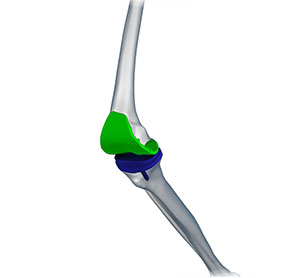
What Is Robotic Knee Replacement?
Robotic knee replacement is a knee replacement procedure in which robotic technology assists the surgeon with preoperative planning and certain aspects of the operation. The surgeon remains fully responsible for performing the procedure and making clinical decisions.
Depending on the system used, three-dimensional imaging may help create a detailed surgical plan based on the patient's individual knee anatomy. During surgery, technology can provide real-time information that helps the surgeon prepare the bone and position the implant according to the planned alignment.
Dr. Eccles offers advanced technology-assisted knee replacement, including robotic and AI/navigation solutions, for appropriately selected patients. The specific technology used depends on the patient's condition and surgical requirements.
What Are the Benefits of Robotic Knee Replacement?
When appropriate for a patient's condition, robotic assistance may provide several potential advantages:
- Personalized preoperative surgical planning
- Detailed visualization of knee anatomy
- Assistance with bone preparation
- Support for implant positioning and alignment
- Real-time intraoperative information
- Ability to refine the surgical plan during the procedure
- Potentially more consistent surgical execution
- Technology-assisted approach tailored to individual anatomy
Robotic assistance does not replace the surgeon or guarantee a particular outcome. Recovery and results depend on numerous factors, including the patient's health, severity of arthritis, implant selection, rehabilitation, and surgical technique.
When Is Robotic Knee Replacement Recommended?
Robotic-assisted knee replacement may be considered for patients who require partial or total knee replacement and whose anatomy and condition are appropriate for technology-assisted surgery. Potential candidates may include patients with:
- Moderate to severe knee osteoarthritis
- Persistent knee pain and stiffness
- Difficulty walking or performing daily activities
- Arthritis that has not responded adequately to conservative treatments
- Structural damage requiring joint replacement
- Appropriate overall health for knee surgery
- An anatomy that can be appropriately evaluated and planned using the available technology
Robotic surgery is not automatically better for every patient. A thorough examination and imaging evaluation help determine whether robotic assistance is appropriate.
What Does Preparation for Robotic Knee Replacement Involve?
Preparation begins with a consultation to evaluate your symptoms, medical history, physical condition, medications, and previous treatments. Imaging studies are used to assess the condition of the knee and determine whether replacement is appropriate.
When the selected robotic platform uses advanced imaging for surgical planning, the information may be used to develop a patient-specific three-dimensional plan before surgery.
Patients may also receive instructions regarding medications, nutrition, activity, preoperative exercises, transportation, and home preparation. Strengthening the muscles around the knee before surgery may help prepare you for postoperative rehabilitation.
Your surgical team will provide specific instructions regarding eating, drinking, medications, and other preparations before the procedure.
How Is Robotic Knee Replacement Performed?
Robotic knee replacement begins with the surgical plan developed from the patient's anatomy and imaging. During the procedure, the surgeon accesses the knee and removes damaged bone and cartilage as necessary.
The robotic system can provide information about the knee's anatomy and alignment and may assist the surgeon in preparing bone surfaces and positioning the implant according to the surgical plan. Some systems can also provide real-time feedback during the operation.
Importantly, the robot does not independently perform the knee replacement. Dr. Eccles controls the surgical instruments and makes decisions throughout the procedure.
After the damaged surfaces have been prepared, the appropriate implant components are placed and the knee is assessed for motion, stability, and alignment before the surgical site is closed.
What to Expect During Recovery After Robotic Knee Replacement?
Recovery begins soon after surgery. Depending on your condition and procedure, you may begin standing and walking with assistance shortly after surgery. Physical therapy focuses on restoring knee motion, strength, balance, and functional mobility.
Some swelling, stiffness, and soreness are expected during the early recovery period. Patients may initially use a walker or cane before gradually progressing toward independent walking.
Dr. Eccles offers outpatient total knee replacement for appropriately selected patients. Those who meet established medical and functional criteria may be able to return home the same day and continue rehabilitation with appropriate support.
Following your exercise program, attending physical therapy when prescribed, taking medications as directed, and gradually increasing activity can support recovery.
What Are the Risks and Complications of Robotic Knee Replacement?
Robotic assistance does not eliminate the risks associated with knee replacement surgery. Potential complications include:
- Infection
- Blood clots
- Bleeding
- Persistent pain or swelling
- Knee stiffness
- Nerve or blood-vessel injury
- Implant loosening or wear
- Limited range of motion
- Continued knee symptoms
- Need for additional surgery
Your individual risks depend on your health, diagnosis, surgical procedure, and other factors. Your surgeon will discuss the potential benefits and risks during your consultation.
Why Choose Dr. Christian Eccles for Robotic Knee Replacement in Gilbert, AZ?
Dr. Christian Eccles is a fellowship-trained, board-certified orthopedic surgeon specializing in hip and knee replacement. He completed an Adult Reconstruction Fellowship at Indiana University after orthopedic surgery residency at the University of Louisville.
His practice focuses on adult joint reconstruction and incorporates advanced technologies, including robotic surgery and AI/navigation, as well as outpatient and fast-recovery joint replacement strategies.
For patients in Gilbert, Queen Creek, Chandler, and Mesa, AZ, Dr. Eccles provides specialized knee care with an emphasis on individualized treatment planning and modern joint-replacement techniques.
Robotic Knee Replacement FAQs
Does a robot perform my knee replacement?
No. The surgeon performs the procedure. Robotic technology serves as an advanced planning and surgical-assistance tool.
Is robotic knee replacement more accurate?
Robotic systems can provide detailed planning and intraoperative information that may assist with alignment, bone preparation, and implant positioning. Individual results vary.
Is robotic knee replacement minimally invasive?
Robotic assistance and minimally invasive surgical techniques are different concepts. A robotic system supports planning and execution, while the surgical approach determines how the knee is accessed.
Can robotic knee replacement be performed as an outpatient procedure?
Yes, appropriately selected patients may qualify for outpatient total knee replacement. Dr. Eccles evaluates each patient individually.
How long does recovery take after robotic knee replacement?
Recovery varies by patient. Many people make substantial functional progress during the first several weeks, while strength, endurance, and overall recovery can continue to improve for several months.
Explore Robotic Knee Replacement in Gilbert, AZ
If knee arthritis is interfering with your mobility and quality of life, Dr. Christian Eccles can evaluate your condition and determine whether robotic-assisted knee replacement may be appropriate. Serving patients from Gilbert, Queen Creek, Chandler, and Mesa, AZ, his practice combines specialized hip and knee expertise with advanced robotic and navigation technology and recovery-focused care. Schedule a consultation to discuss your knee pain, treatment options, and whether robotic knee replacement is right for you.