Minimally Invasive Knee Surgery in Gilbert, Queen Creek, Chandler and Mesa, AZ
If knee pain, stiffness, or arthritis is limiting your ability to walk, exercise, work, or enjoy everyday activities, minimally invasive knee surgery may offer a less disruptive approach to treatment. Dr. Christian Eccles, a fellowship-trained and board-certified hip and knee replacement surgeon, provides advanced knee care for patients in Gilbert, Queen Creek, Chandler, and Mesa, AZ. His practice emphasizes modern surgical techniques, robotic assistance, outpatient joint replacement, and accelerated rehabilitation when appropriate.
What Is Minimally Invasive Knee Surgery?
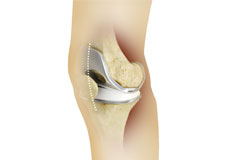
Minimally invasive knee surgery refers to surgical techniques designed to treat knee problems through smaller or strategically placed incisions and with less disruption to surrounding tissues when clinically appropriate. The specific approach depends on the condition being treated, the patient's anatomy, and the type of procedure required.
For selected patients, minimally invasive techniques may be used during procedures such as partial knee replacement or knee replacement. Dr. Eccles' practice also offers outpatient total knee replacement, with advances in anesthesia, less invasive techniques, and early rehabilitation helping appropriately selected patients return home the same day.
What Are the Benefits of Minimally Invasive Knee Surgery?
When appropriate for the patient's condition, minimally invasive approaches may provide several potential advantages:
- Smaller or less extensive incisions
- Less disruption of surrounding soft tissues
- Reduced postoperative discomfort in some patients
- Earlier mobility and rehabilitation
- Potentially shorter recovery
- Earlier return to everyday activities
- Potentially shorter hospital or surgical-center stays
- Smaller surgical scars in some procedures
The benefits vary according to the specific knee procedure, overall health, and individual recovery. For example, Dr. Eccles' partial medial knee replacement information notes smaller incisions, minimal bone removal, a shorter recovery period, and the potential for a more natural-feeling knee among the procedure's advantages for appropriately selected patients.
When Is Minimally Invasive Knee Surgery Recommended?
Minimally invasive knee surgery may be considered when knee damage causes persistent symptoms and nonsurgical treatment no longer provides adequate relief. Depending on the diagnosis, surgery may be considered for patients with:
- Knee osteoarthritis causing significant pain and stiffness
- Damage limited primarily to one compartment of the knee
- Persistent symptoms that interfere with daily activities
- Knee damage that has not responded adequately to conservative treatment
- Appropriate anatomy and overall health for the proposed procedure
- Arthritis severe enough to warrant partial or total knee replacement
Not every patient is a candidate for a minimally invasive approach. A comprehensive examination and appropriate imaging help determine which procedure and surgical technique are most suitable.
What Does Preparation for Minimally Invasive Knee Surgery Involve?
Preparation begins with a consultation to review your symptoms, medical history, medications, physical condition, and imaging. Your surgeon may use X-rays, CT scans, or MRI studies when appropriate to understand the condition of the knee and plan treatment.
Before surgery, patients should follow instructions regarding medications, eating and drinking, medical optimization, transportation, and postoperative support. Dr. Eccles' patient resources include preoperative and postoperative knee guidelines, exercises, and total knee replacement instructions.
How Is Minimally Invasive Knee Surgery Performed?
The technique varies according to the procedure. In partial knee replacement, for example, the surgeon removes damaged portions of the affected compartment while preserving healthy bone and other structures when possible. Trial components are placed and the knee is assessed for motion and balance before the permanent implants are inserted.
For appropriate knee replacement patients, technology may further assist surgical planning and execution. Dr. Eccles offers the TMINI® Miniature Robotic System, which uses CT-based three-dimensional planning and real-time intraoperative guidance to assist with bone preparation and implant positioning.
What to Expect During Recovery After Minimally Invasive Knee Surgery?
Recovery depends on the procedure performed and your overall health. Rehabilitation typically begins soon after surgery, with physical therapy focused on restoring movement, strength, balance, and walking ability. Patients may initially use a walker or other assistive device and gradually increase activity according to their surgeon's instructions.
For appropriately selected outpatient joint replacement patients, discharge may occur the same day once safety criteria are met, including stable vital signs, adequate pain control, the ability to tolerate food and drink, and satisfactory physical therapy progress.
What Are the Risks and Complications of Minimally Invasive Knee Surgery?
Although minimally invasive techniques are designed to reduce surgical disruption, every operation carries potential risks. These may include:
- Infection
- Blood clots
- Bleeding
- Persistent pain or stiffness
- Nerve or blood-vessel injury
- Implant loosening or wear
- Continued or recurrent knee symptoms
- Need for additional surgery
Your individual risks depend on your diagnosis, procedure, medical history, and other factors.
Why Choose Dr. Christian Eccles for Minimally Invasive Knee Surgery in Gilbert, AZ?
Dr. Christian Eccles is a fellowship-trained, board-certified hip and knee replacement surgeon with specialized adult reconstruction training at Indiana University following orthopedic surgery residency at the University of Louisville. His practice focuses specifically on hip and knee replacement and incorporates advanced approaches including robotic technology and outpatient joint replacement.
For patients throughout Gilbert, Queen Creek, Chandler, and Mesa, AZ, this specialized focus can provide access to individualized evaluation and modern treatment options for painful knee conditions.
Minimally Invasive Knee Surgery FAQs
Is minimally invasive knee surgery appropriate for everyone?
No. Candidacy depends on the diagnosis, knee damage, anatomy, overall health, and procedure being considered.
Is minimally invasive knee surgery the same as robotic knee replacement?
Not necessarily. Minimally invasive describes the surgical approach, while robotic assistance refers to technology used to support surgical planning and execution. The two approaches may be used together in selected cases.
How soon can I walk after surgery?
Walking and rehabilitation may begin shortly after surgery when medically appropriate. Your surgeon and physical therapist will determine the safest progression.
Can knee replacement be performed as an outpatient procedure?
Yes. Dr. Eccles offers outpatient total knee replacement for appropriately selected patients who meet established safety and recovery criteria.
How do I know which knee surgery is right for me?
A consultation, physical examination, and appropriate imaging can help determine whether nonsurgical treatment, partial knee replacement, total knee replacement, or another procedure is appropriate.
Get Started With Minimally Invasive Knee Surgery in Gilbert, AZ
If persistent knee pain is interfering with your quality of life, consider an evaluation with Dr. Christian Eccles in Gilbert, AZ. Serving patients from Gilbert, Queen Creek, Chandler, and Mesa, his practice offers specialized hip and knee care and advanced treatment options tailored to each patient's condition and goals. Contact the office to discuss your symptoms and determine whether minimally invasive or technology-assisted knee surgery may be appropriate for you.